
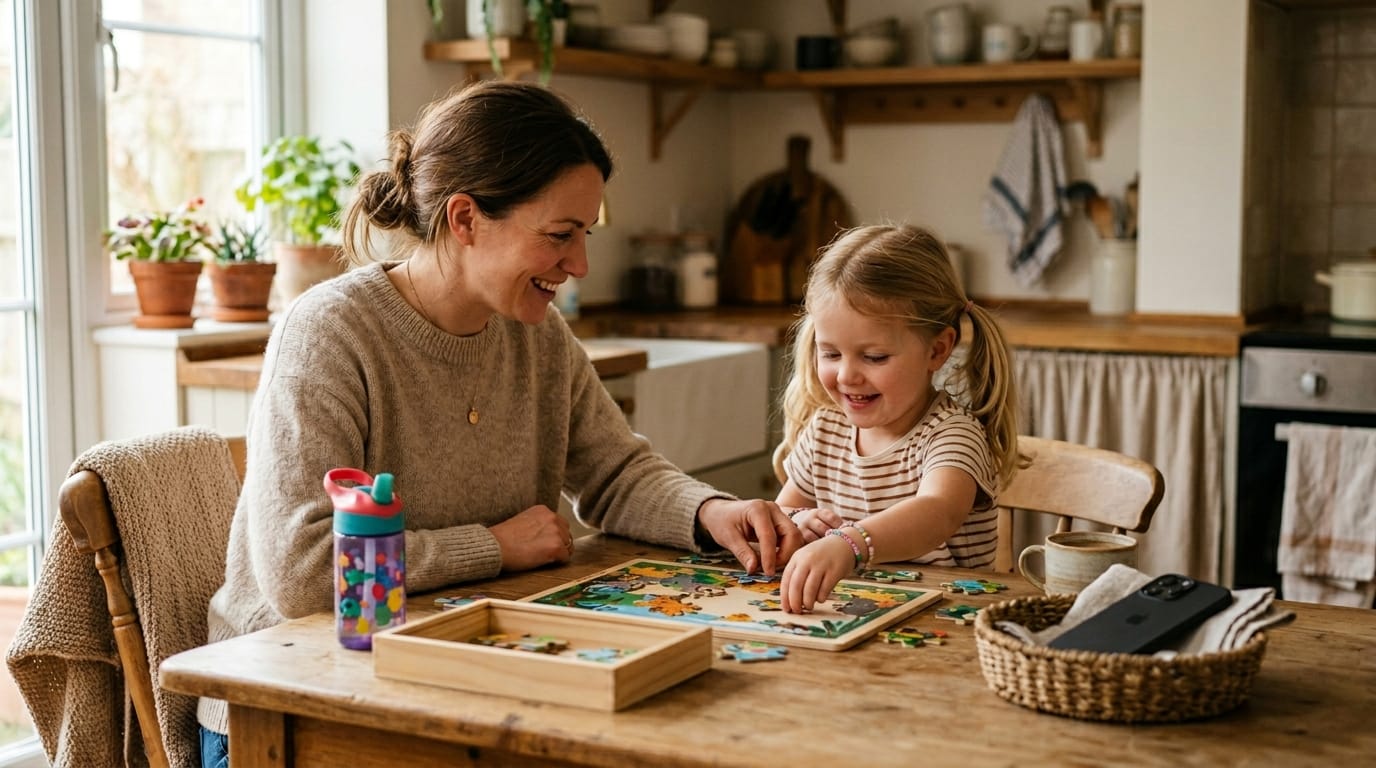
Phone-free moments for moms 2026 are becoming a bigger parenting conversation because many families are realizing something honest: kids are not the only ones pulled toward screens. Moms use phones for work, school messages, grocery lists, photos, calendars, bills, family chats, recipes, reminders, and quick mental breaks. So when people say, “Just put your phone away,” it can feel simple in theory but hard in real life.
Still, children notice phone habits. They notice when a parent looks down during a story. They notice when dinner gets interrupted by notifications. They notice when a quick check turns into ten minutes of scrolling. That does not mean moms should feel ashamed. It means small phone-free moments can help families reconnect without creating another impossible standard.
The goal is not to become a perfect screen-free parent. That is not realistic for most moms. The better goal is to create predictable spaces where your child gets your attention without competing with a device. These moments can be short. They can be simple. Most importantly, they can be consistent.
This guide explains how phone-free moments for moms 2026 can reduce digital distraction, support connection, and model healthier screen habits. It also connects with other Great Articles for Moms resources like Phone-Free Childhood in 2026, The 2026 Family Media Plan, and How Moms Can Reduce Mental Load.
Why Phone-Free Moments for Moms 2026 Are Trending
Parents are tired of constant screen battles. Many moms already manage their children’s screen time, homework apps, school portals, gaming requests, group chats, and online safety concerns. However, a newer part of the conversation focuses on adult screen habits. Children do not only follow rules. They copy routines.
If a child hears “no more screen time” while watching a parent scroll through a phone, the message can feel confusing. On the other hand, when a mom says, “I’m putting my phone away while we eat,” the child sees the rule in action. That kind of modeling can feel more powerful than another lecture.
Phone-free moments also protect attention. Kids often ask for connection in small ways: showing a drawing, telling a story, asking a random question, or sitting close after school. These moments may not look important, but they build trust. When a phone interrupts them again and again, the child may stop trying as often.
However, this topic should not become another guilt trap. Moms already carry enough pressure. Phone-free moments should make family life lighter, not heavier. The right plan should fit real routines, not an ideal version of motherhood from social media.
What Kids Learn From Mom’s Phone Habits
Children learn by watching. If phones are always present during meals, bedtime, playtime, and conversations, kids may learn that constant availability is normal. If adults check notifications during every quiet moment, kids may also struggle to tolerate boredom.
That does not mean phones are bad. Phones help moms handle modern life. They connect families, organize schedules, capture memories, and provide support. The problem starts when the phone takes over moments that need presence.
A simple phrase can help: “I’m using my phone for a reason.” For example, you might say, “I’m checking the school message,” or “I’m setting a timer for dinner.” This helps children understand the difference between useful phone use and distracted scrolling.
Phone-Free Zones That Actually Work
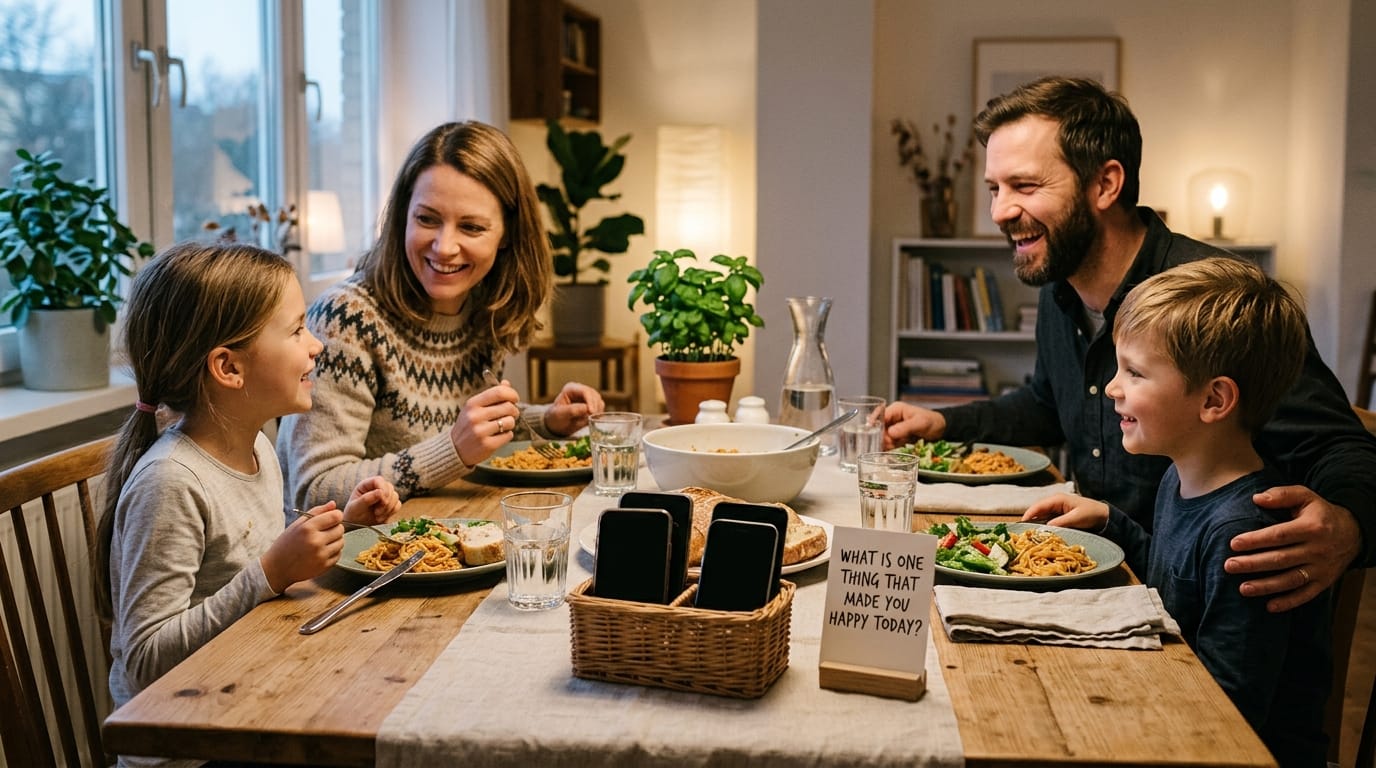
Phone-free zones work best when they are specific. Instead of saying, “We need less phone time,” choose one or two places where phones take a break. The dinner table is a strong place to start. Bedrooms can also become calmer when devices stay outside at night.
You can use a small basket, drawer, or charging station. Keep the rule visible and simple. For example: phones rest during dinner, bedtime stories, and the first ten minutes after school. These small spaces create connection without demanding a full digital detox.
The Difference Between Necessary Phone Use and Scrolling
Kids do not need parents to avoid phones all day. They need clarity. Necessary phone use includes checking a doctor message, replying to a school update, paying a bill, using navigation, or taking a quick family photo. Scrolling is different because it can stretch without a clear endpoint.
Try naming the difference out loud. Say, “I need two minutes to answer this message, then I’m putting my phone down.” That simple sentence models self-control. It also helps your child trust that your attention is coming back.
How to Build Phone-Free Moments Without More Mom Guilt
Mom guilt can turn even a helpful habit into pressure. You may remember every time you checked your phone while your child talked. You may feel bad for needing a break. You may compare yourself to moms online who seem more present, more creative, and more patient.
But phone-free moments for moms 2026 should not start with shame. They should start with support. A realistic plan accepts that moms use phones because life demands it. It also creates boundaries so the phone does not quietly take over every open space.
Start with the easiest moment, not the hardest. If mornings are chaotic, do not begin there. If dinner is more manageable, start with dinner. If bedtime is tense, begin with five phone-free minutes before lights out. Progress matters more than perfection.
This approach pairs well with the site’s article on how to stop mom guilt. The point is not to blame yourself. The point is to build a small habit that helps your family feel more connected.
How to Reset Without Becoming Perfect
When you forget, reset quickly. You do not need a speech. You can simply say, “I got distracted. I’m putting my phone down now.” That sentence shows accountability without drama.
Children benefit from seeing repair. They learn that healthy habits are not about never making mistakes. They are about noticing, adjusting, and trying again. That is a powerful lesson for screen habits and emotional growth.
A Realistic Phone-Free Plan for Busy Moms
A good phone-free plan should be small enough to keep on tired days. If it depends on perfect energy, it will fail. Choose a few daily anchors that already exist in your routine. Then add a phone boundary to those moments.
For example, you might create a five-minute greeting after school with no phone in your hand. You might keep breakfast phone-light, even if it cannot be completely phone-free. You might charge your phone in the kitchen during bedtime stories. You might create one “connection pocket” each evening where your child gets your full attention.
Connection pockets do not need to be fancy. They can include reading one book, folding laundry together, watering plants, walking around the block, doing a puzzle, or sitting outside. Kids usually do not need a perfect activity. They need a parent who is emotionally available for a few clear minutes.
If your family already uses a screen-time plan, add parent phone habits to it. Great Articles for Moms’ family media plan guide can help you build rules around when, where, and how screens fit into your household. For a trusted outside resource, you can also review the American Academy of Pediatrics guide on how to make a family media plan.
Build Small Rituals Around Connection
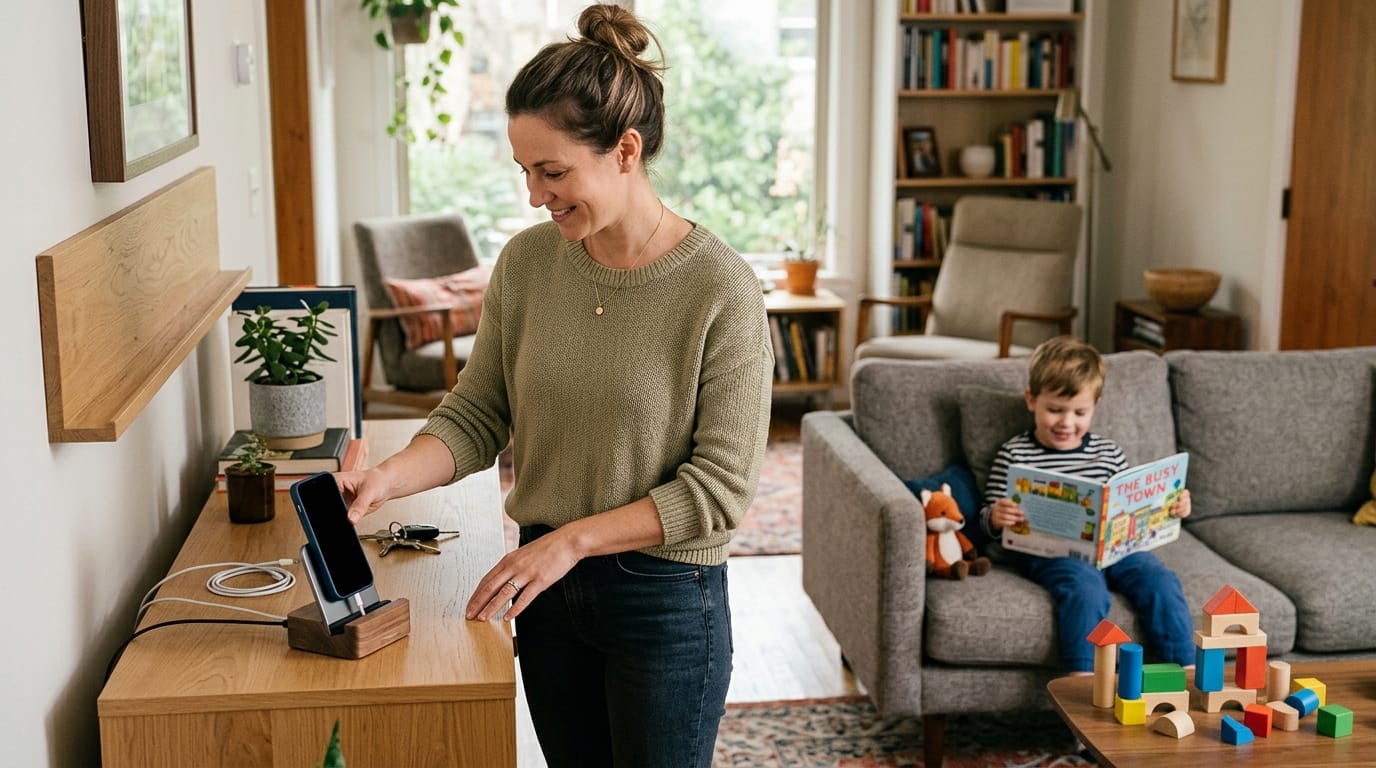
Rituals help because they remove daily decision-making. Instead of deciding every day when to put the phone away, you attach the habit to something that already happens. Dinner begins, phone rests. Bedtime starts, phone charges. Child gets in the car, notifications pause.
You can also create a “first attention” habit. When your child walks into the room after school or after waking up, give eye contact before checking your phone. This takes seconds, but it sends a clear message: you matter more than the notification.
For moms carrying a heavy mental load, rituals reduce friction. You do not have to create a new system every day. You only repeat one small choice until it becomes normal.
What to Do When Your Child Pushes Back
Some kids may complain when phone-free moments begin. That is normal, especially if screens have become part of transitions, meals, or boredom. Stay calm and keep the rule simple. You can say, “Phones are resting during dinner,” or “We are doing ten quiet minutes before bedtime.”
Offer an alternative before frustration grows. Try conversation cards, coloring, a short walk, a simple chore together, music, blocks, or a book. The goal is not to entertain your child every second. Instead, the goal is to help them experience connection and boredom without immediately reaching for a screen.
Phone-free moments for moms 2026 are not about rejecting technology. They are about choosing when technology gets to enter family life. A phone can be useful, but it should not become the loudest presence in the room.
Start small. Pick one phone-free zone, one connection pocket, and one reset phrase. Let your child see you practice. Let them see you make mistakes and try again. Over time, those small habits can create a calmer home, fewer screen battles, and more moments where your child feels fully seen.