

AI toys for kids in 2026 are showing up in more homes, wish lists, and gift guides than ever before. They promise conversation, learning, entertainment, and even companionship. For busy moms, it is easy to see the appeal. A toy that answers questions, tells stories, and keeps a child engaged can sound like a helpful extra hand. However, this is one of those parenting trends that deserves a closer look before you click “add to cart.”
Unlike older talking toys, many new AI-powered toys do more than repeat phrases or play songs. They can respond in fresh ways, remember past interactions, and feel much more personal to a child. That is exactly why moms should slow down and ask better questions. A toy that feels smart can also raise issues around privacy, emotional attachment, screen habits, and family boundaries.
This topic fits naturally with the kind of support Great Articles for Moms already offers. If you have been trying to reduce digital friction at home with The 2026 Family Media Plan: A Screen-Smart Guide for Moms (Without Constant Battles), or if you are already carrying too much invisible planning with How Moms Can Reduce Mental Load and Feel Less Overwhelmed Every Day, then an article about AI toys makes sense. It sits right at the intersection of parenting, tech, and mom decision fatigue.
Why AI Toys for Kids in 2026 Are Suddenly on Every Mom’s Radar
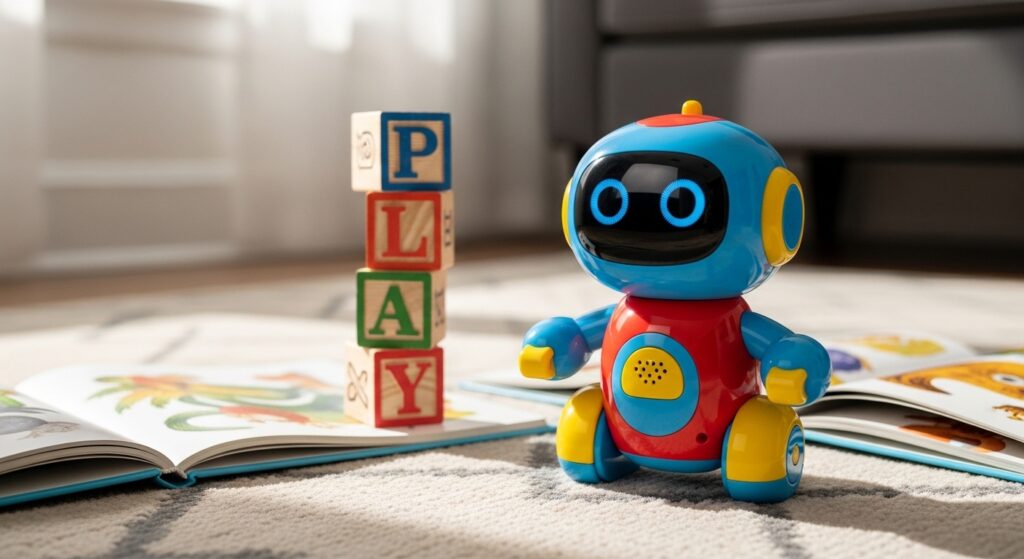
AI toys are not trending just because they are new. They are trending because they blur the line between toy, device, and companion. That makes them different from the usual battery-powered toys families have known for years. In many cases, the real selling point is not that the toy moves or lights up. It is that it talks back in ways that feel more human.
What makes AI toys different from regular smart toys
A regular electronic toy usually follows a script. It sings the same songs, asks the same questions, or responds with the same small set of phrases. An AI toy can feel more open-ended. It may generate new answers, remember what a child said earlier, or react in ways that feel surprisingly personal. That difference is exactly what draws families in. At the same time, it is what makes the parenting questions more serious.
They can feel more like companions than toys
Many moms are not worried about a toy being “too smart” in a technical sense. They are worried about how a child experiences it. If a toy remembers a child’s name, preferences, stories, or feelings, the child may start to treat it more like a friend than an object. For older kids, that may simply feel fun. For younger children, however, that can get emotionally blurry very fast.
This is where a positive parenting mindset still matters. Kids need connection, limits, and real-world emotional learning more than they need a device that imitates those things. That is why this topic pairs naturally with How to Build a Positive Parenting Approach That Works. A tool should support family life, not quietly replace the relationship work that happens best between real people.
The privacy questions are bigger than most product pages admit
Another issue is data. Some AI toys rely on microphones, internet access, stored interactions, or app-based controls. That means the toy may not just be “playing.” It may also be collecting information, sending data, or storing voice interactions in ways most parents never fully review. Busy moms already have enough to track. So if a product makes privacy settings confusing, vague, or hard to manage, that is a red flag.
This is where mom mental load becomes part of the conversation. It is not just about whether the toy works. It is about whether a mom now has one more system to monitor, one more password to manage, one more device to supervise, and one more set of settings to double-check. If family tech makes your life more complicated instead of more manageable, it may not be worth it.
Why younger kids need more caution, not more features
One of the biggest mistakes parents can make is assuming “educational” means “automatically safe.” That is not always true. A toy can market itself as helpful, interactive, and enriching while still being a poor fit for a young child’s stage of development. Little kids do not always understand the difference between pretend conversation and machine-generated responses. That matters more than most packaging suggests.
A younger child may not understand what the toy really is
A preschooler may not think, “This is a chatbot-powered toy using a microphone and software system.” They may think, “This toy knows me. This toy listens to me. This toy understands me.” That difference matters. The younger the child, the easier it is for a device to feel emotionally real. And once a toy starts feeling like a comfort object with a voice, limits become much harder to set.
If your child already struggles with transitions, big feelings, or screen boundaries, this is worth thinking through before bringing an AI toy home. In some families, the better answer may be simpler, more physical play. Your post on Affordable and Fun Weekend Activities for the Whole Family is a helpful internal link here because it reminds moms that connection and novelty do not have to come from one more connected device.
How Moms Can Decide Without Panic, Guilt, or Tech Pressure
The goal is not to panic every time a new product appears. The goal is to make a calmer, smarter decision. Not every talking toy is a disaster. Still, not every trendy product belongs in your house either. Moms do not need to prove they are “good with tech” by saying yes to every new category. They just need a simple way to decide whether a product fits their child, their values, and their home life.
A simple checklist before you buy an AI toy

Before you buy, stop and ask what problem the toy is supposed to solve. Is it for learning? Entertainment? Comfort? Quiet time? If the answer is vague, that is a sign to pause. Then move to practical questions. Does it need Wi-Fi? Does it store voice data? Can the microphone be muted? Are privacy settings easy to find? Does your child really need this feature, or does it just sound impressive?
You should also think about age and temperament. A child who already gets deeply attached to toys or screens may need more caution, not more interactivity. Likewise, a family already trying to create better screen habits may not want to introduce one more device that feels hard to manage. That is why this article connects so well to your family media plan post. AI toys do not exist outside the rest of your home tech culture. They become part of it.
If you decide to try one, set expectations early. Keep it in shared family spaces. Limit when it can be used. Turn off unnecessary features. Avoid bedtime use if the toy tends to wind your child up or create dependence. And most importantly, stay curious about how your child relates to it. If the toy starts becoming the center of emotional comfort, that is information, not overreaction.
Questions worth asking before you say yes
- Does this toy need internet access to work the way it is advertised?
- Can I clearly understand what data it collects?
- Can the microphone or listening features be turned off easily?
- Is my child old enough to use this without confusion or overattachment?
- Will this make family life simpler, or add another thing for me to manage?
- Would a traditional toy, book, or activity meet the same need better?
If you already own one, focus on boundaries instead of guilt
Many moms will read articles like this after the toy is already in the house. That does not mean you made a bad decision. It means you can still be intentional now. Start by reviewing the settings. Turn off anything you do not need. Move the toy out of bedrooms if needed. Treat it like a family tech device, not like a private companion.
This is also a good moment to talk with your child in simple language. You do not have to make it scary. You can say that the toy is a tool, not a real friend, and that family rules still apply. That keeps the tone calm. It also helps children understand that fun technology still needs real-world limits.
Watch for signs the toy is taking up too much space
Some warning signs are easy to miss at first. Your child may become unusually upset when the toy is turned off, insist on talking to it alone, or start preferring it over regular play, family interaction, or simple boredom. Those are not reasons to panic. They are reasons to rebalance. Pulling back early is often easier than waiting until the habit feels emotionally loaded.
If family life already feels overstretched, it also helps to zoom out. Moms who are dealing with overload may be more tempted to keep any product that promises easy relief. That is understandable. However, relief that adds more supervision, more conflict, or more digital clutter may not really be relief at all. If that sounds familiar, your post on Mom Burnout in 2026: Signs You’re Running on Empty and How to Recover Gently is worth linking here too. Sometimes a purchase decision is really about parent exhaustion, not the product itself.
In the end, AI toys for kids in 2026 are not automatically good or bad. They are simply one more place where moms need clarity instead of hype. The smartest move is not to follow the trend blindly or reject it out of fear. It is to ask better questions, keep your child’s stage in mind, and make sure the toy fits your family instead of reshaping it.
For a relevant external resource, see Common Sense Media’s AI Toys guidance. It is a useful starting point if you want a clearer sense of the privacy, safety, and developmental issues before buying.