
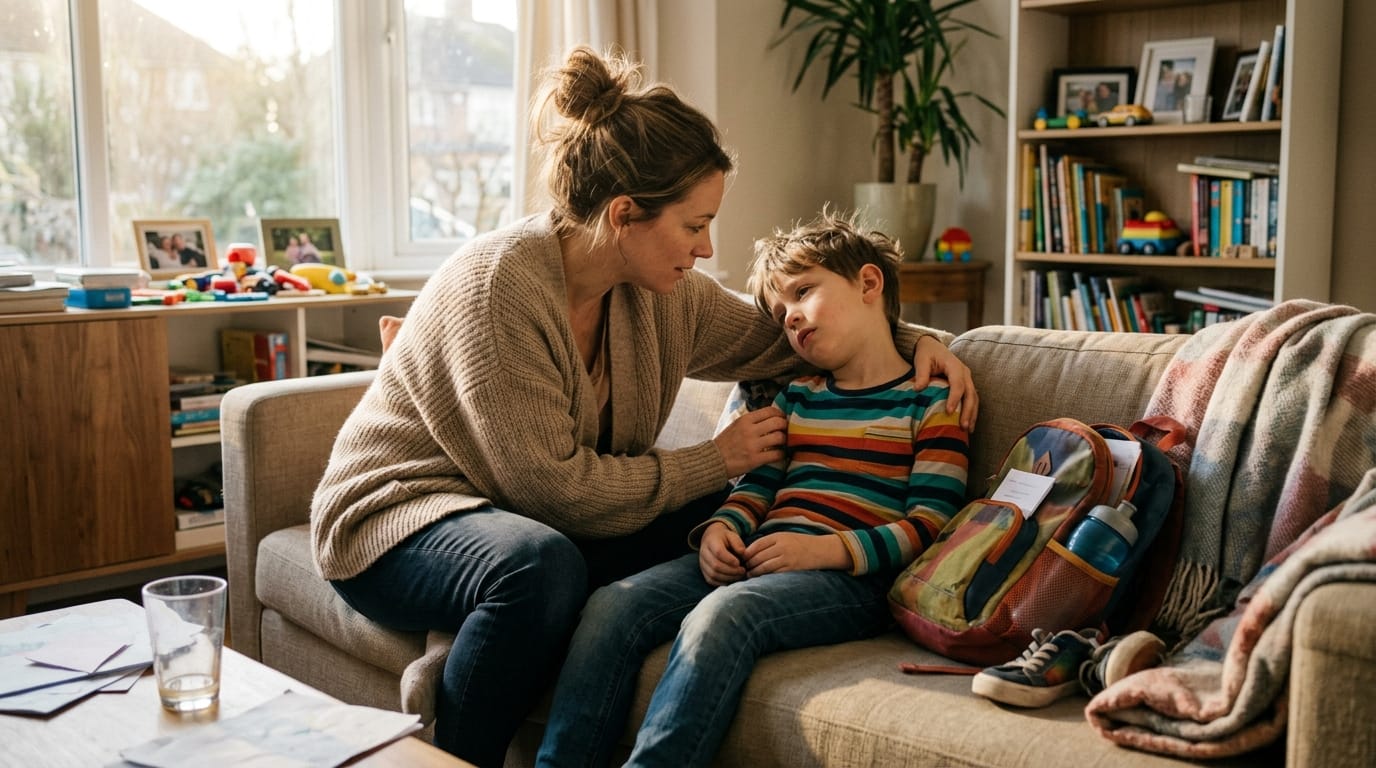
After-school restraint collapse in kids is a phrase more parents are encountering in 2026. Your child spends the school day following instructions, listening to teachers, navigating friendships, and managing emotions. Then, just minutes after arriving home, everything changes. There may be tears, shouting, arguments, or a sudden refusal to cooperate.
For moms, these difficult afternoons can be confusing. Teachers might describe the child as polite and well-behaved, yet the same child seems overwhelmed at home. It can feel as though every simple request starts another disagreement.
The term after-school restraint collapse describes a pattern in which children struggle to regulate their emotions after spending considerable energy managing themselves throughout the day. It is a popular descriptive term, not a formal medical diagnosis.
In August 2026, Understood.org updated its expert-reviewed explanation of this experience, highlighting common patterns among children with ADHD and other neurodevelopmental differences. However, children without these conditions may also experience difficult transitions after demanding school days.
Understanding what happens after school can help parents respond more effectively. Rather than assuming every outburst is deliberate misbehavior, families can examine tiredness, hunger, sensory overload, anxiety, and the need for rest.
What Is After-School Restraint Collapse and Why Does It Happen?
During the school day, children manage numerous expectations. They may need to remain seated, follow schedules, concentrate on assignments, cooperate with classmates, and handle unexpected changes.
Even enjoyable school days can require sustained emotional and cognitive effort. By the time children arrive home, they may have fewer resources available for handling frustration.
Home often feels more familiar and secure than school. Some children express feelings there that they have suppressed or managed earlier. However, parents should not assume every difficult afternoon means a child feels safest at home. Persistent distress can also indicate problems that deserve investigation.
Common signs of after-school emotional overload
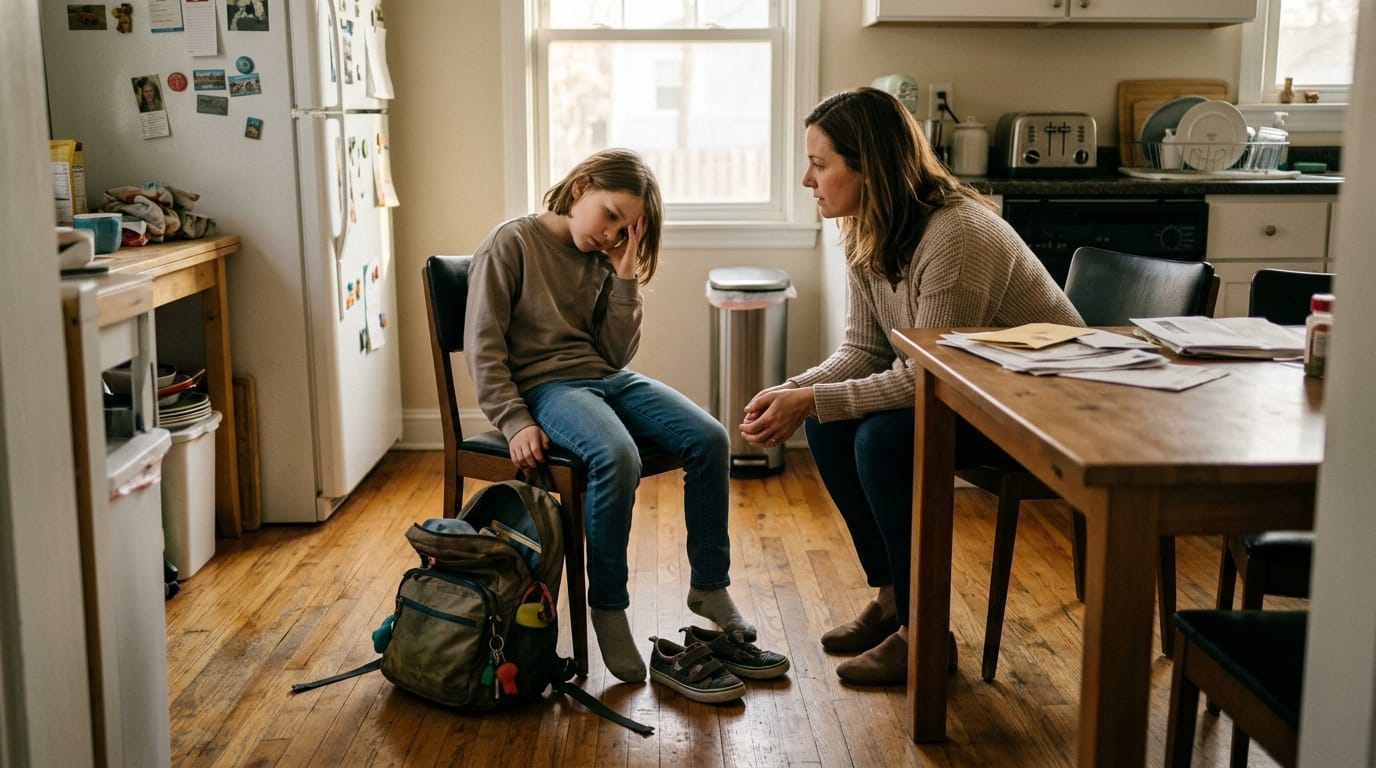
One child might cry because their snack is not ready. Another becomes angry when asked to remove their shoes. Some children withdraw, refuse conversation, or retreat to their bedrooms.
Other signs may include irritability, sibling arguments, unusually intense reactions to small disappointments, and difficulty beginning homework.
The pattern can vary with age and temperament. Younger children may communicate through tears and physical behavior, while older children may appear impatient, withdrawn, or easily frustrated.
Frequency and severity matter. Occasional difficult afternoons are different from repeated episodes that threaten safety, disrupt family life, or interfere with normal functioning.
Why a well-behaved student might struggle at home
Teachers and parents observe children in different environments. Classroom routines may provide predictable expectations and structured activities that make behavior easier to manage.
At home, the transition from school to family responsibilities can create another set of demands. A child who has spent hours concentrating may struggle when immediately asked about homework, chores, or tomorrow’s schedule.
Instead of beginning with several questions, parents can offer a welcoming greeting and allow time to settle. This approach recognizes that transitions can be challenging without excusing hurtful behavior.
Our guide to slow parenting for moms explores how a less crowded family routine can create more space for connection and recovery.
Hunger, tiredness, and sensory overload
Basic physical needs can influence a child’s emotional responses. Hunger, insufficient sleep, dehydration, and demanding activity may reduce their ability to cope with additional frustration.
Children may also experience sensory overload from crowded hallways, loud classrooms, bright lighting, or constant social interaction.
After school, consider whether a snack, water, quiet activity, or movement break would help. These are practical supports rather than guaranteed treatments for every emotional outburst.
Different children need different environments. One may enjoy talking during a walk, while another may prefer reading quietly before discussing the day.
Is after-school restraint collapse the same as a tantrum?
Not necessarily. Tantrums, frustration, emotional overload, and anxiety can involve similar behaviors, but they are not interchangeable explanations.
A tantrum may occur when a young child cannot manage disappointment or communicate an unmet need. Emotional overload may reflect accumulated demands, tiredness, or difficulty managing sensory information.
Parents do not need to diagnose the exact cause during a difficult moment. The immediate goal is usually safety, calm communication, and understanding what the child needs.
If the child hits, throws objects, or threatens someone, adults should intervene to maintain safety while avoiding unnecessary escalation.
When behavior may signal anxiety or another concern
Repeated after-school distress sometimes occurs alongside school anxiety, bullying, learning difficulties, sleep problems, or other emotional concerns.
Pay attention if your child frequently refuses school, develops recurring stomachaches, loses interest in favorite activities, or becomes increasingly distressed.
The American Academy of Pediatrics recommends seeking additional support when anxiety interferes with school attendance, sleep, play, or other everyday activities.
Parents can begin by speaking with teachers and a pediatrician. The goal is to identify possible causes rather than assume a popular parenting term explains every symptom.
It is also helpful to observe patterns. Does the behavior occur on particular school days? Is it worse after extracurricular activities? Does it improve after eating or resting?
How Moms Can Help Kids Recover After a Long School Day
A supportive after-school routine does not have to be complicated. In fact, adding too many new rules can create more pressure for both children and parents.
Start with a predictable transition. Children may benefit from knowing that arriving home includes a chance to put away their belongings, eat something, and choose a calming activity before beginning homework.
Instead of immediately asking for a detailed report about school, try a simple greeting. Some children are ready to talk right away, while others open up after they have had time to decompress.
Maintaining clear boundaries is still important. Emotional understanding does not mean permitting hitting, insults, or unsafe behavior. Parents can validate feelings while setting respectful limits.
Build a realistic after-school decompression routine
There is no single schedule that works for every family. Some children benefit from twenty minutes of quiet activity, while others need outdoor movement or connection with a parent.
For younger children, familiar routines may be especially helpful. A snack, comfortable clothes, and a favorite activity can make the transition easier.
Older children may appreciate having a say in how their afternoon begins. Offering two reasonable choices can support independence without creating an overwhelming number of decisions.
For example, ask whether they would prefer a short walk or quiet reading before homework. Their answer can guide a manageable routine.
Try connection before questions and homework
One-on-one attention can help children feel supported. This might involve sitting together, drawing, preparing a snack, or taking a short walk.
Not every child wants physical affection or conversation immediately. Respecting personal preferences can make connection feel less demanding.
Our article on unstructured play for kids explains why child-led activities can provide opportunities for creativity, independence, and emotional development.
Parents can also model calm responses. A statement such as “You seem tired, and we can talk when you’re ready” acknowledges the situation without forcing a conversation.
When an outburst begins, use a steady voice and simple language. Long explanations are often less useful when a child is already overwhelmed.
Once everyone is calmer, discuss what happened. Children can gradually learn to identify frustration, request breaks, and communicate needs in safer ways.
Some families find it useful to create a simple emotional check-in. A child might choose a color, drawing, or word to describe how the day felt.
These activities should remain flexible. They are opportunities for communication, not another assignment children must complete.
School communication may also help. Teachers can share whether a child appears unusually tired, anxious, isolated, or overwhelmed during the day.
If academic pressure seems to contribute, discuss realistic expectations and whether additional support is available. Homework routines may need adjustments based on age, learning needs, and school requirements.
The American Academy of Pediatrics’ 2026 policy update also emphasizes the importance of recess and breaks during the school day. These opportunities can support attention, social development, and emotional well-being.
That research reinforces an important point: children need opportunities for rest and play, not only academic performance.
For background on childhood anxiety and practical parenting strategies, read the American Academy of Pediatrics’ guidance on helping children manage anxiety.
Screen time also deserves consideration. Some children enjoy relaxing with a program or game, but autoplay and unlimited access may make transitions more difficult.
A predictable family media routine can help establish expectations without turning every afternoon into a negotiation.
Our 2026 family media plan offers ways to create practical household boundaries while keeping room for offline play.
Moms also need a workable routine. If afternoons regularly feel overwhelming, consider simplifying commitments or dividing responsibilities with other available caregivers.
A supportive response does not require staying perfectly calm every moment. Parents can repair a difficult interaction by acknowledging what happened and demonstrating a better approach.
If emotional outbursts are severe, persistent, or connected with concerns about learning, bullying, or mental health, seek guidance from a pediatrician or qualified child mental health professional.
Professional support may be particularly important when a child becomes unsafe, refuses school repeatedly, or experiences distress that does not improve with routine adjustments.
After-school restraint collapse in kids is a useful phrase for describing a pattern some families recognize, but it should not replace careful attention to each child’s circumstances.
With realistic expectations, predictable routines, emotional connection, and appropriate support, families can make afternoons more manageable.
The goal is not to prevent every difficult emotion. It is to help children learn safer ways to express feelings while building an after-school environment that supports rest, communication, and healthy development.
Disclaimer: This article provides general parenting education and does not replace individualized medical or mental health advice.