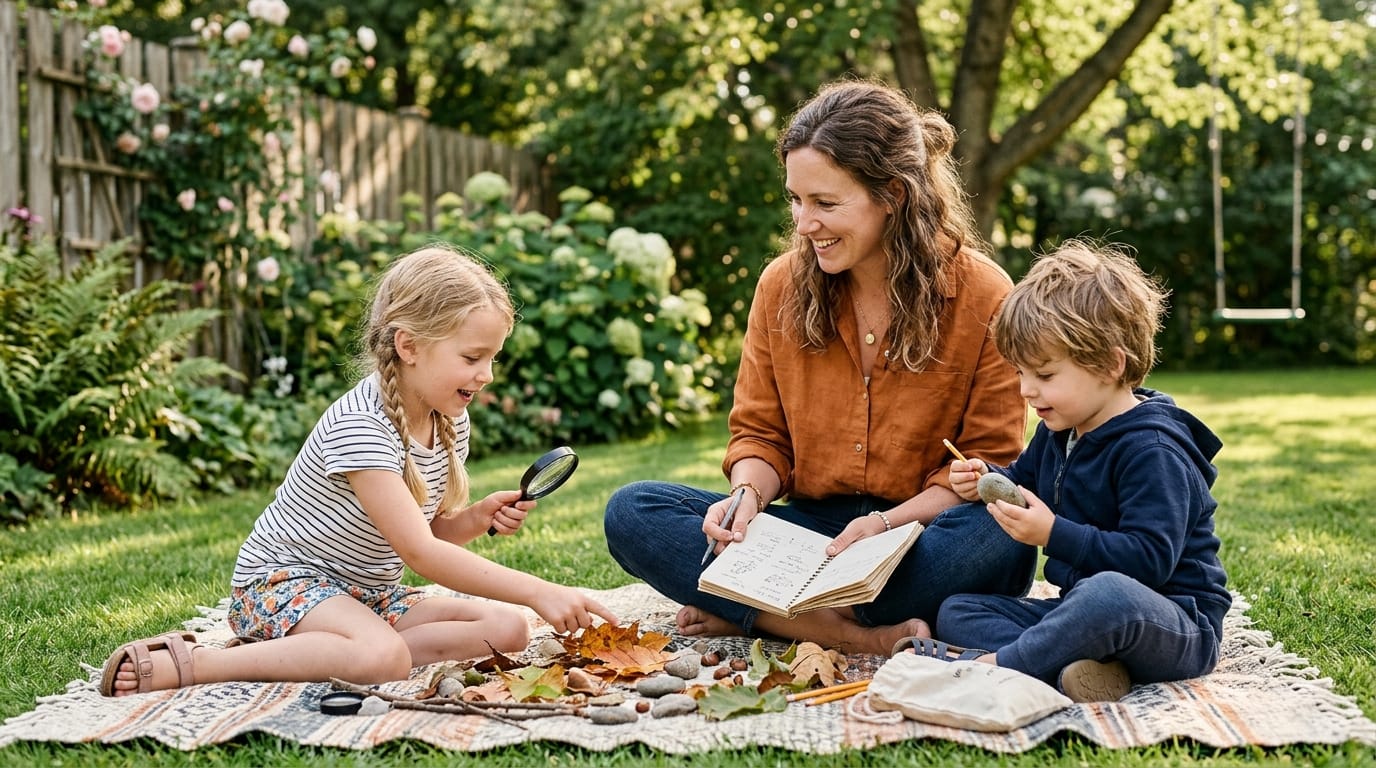
Outdoor learning for kids is becoming one of the most practical parenting trends in 2026, especially for moms who want less screen-time stress and more meaningful family moments. The best part is that outdoor learning does not require a perfect backyard, expensive supplies, or a homeschool-level schedule. It can happen on a balcony, in a small garden, at a park, during a walk, or even while waiting outside after school.
Many moms are looking for learning that feels calmer, more active, and less forced. Instead of relying only on worksheets, apps, and structured lessons, families are bringing simple education back into real life. A leaf can become a science lesson. A grocery walk can become a counting game. A rainy afternoon can become a lesson about weather, patience, and observation. This is not about turning every moment into a lesson. It is about helping children notice the world around them while giving moms a break from overplanning.
This topic connects naturally with the growing need for screen-smart routines. If your family has been working on healthier device habits, you may also like our guide to creating a family media plan for moms. Outdoor learning gives kids something real and interesting to do when screens are off.
Why Outdoor Learning Is Trending With Moms in 2026
Outdoor learning is trending because parents are tired of choosing between “educational” and “fun.” Moms want activities that help kids learn, move, imagine, and calm down without adding another complicated task to the day. According to Pinterest’s 2026 parenting trend report, searches for educational activities for kids and outdoor learning have increased, showing that families are looking for hands-on learning beyond traditional schoolwork. That makes sense. Children often learn best when they can touch, move, ask questions, and explore.
For moms, this trend is also about reducing pressure. Modern parenting already comes with enough mental load: school forms, snacks, appointments, screen limits, emotional needs, messy rooms, and daily routines. Outdoor learning works because it can be simple. You do not need to prepare a full lesson plan. You can start by asking your child what they notice, what changed, what they hear, what they smell, or what they think will happen next.
Parents want learning that feels calmer, active, and real
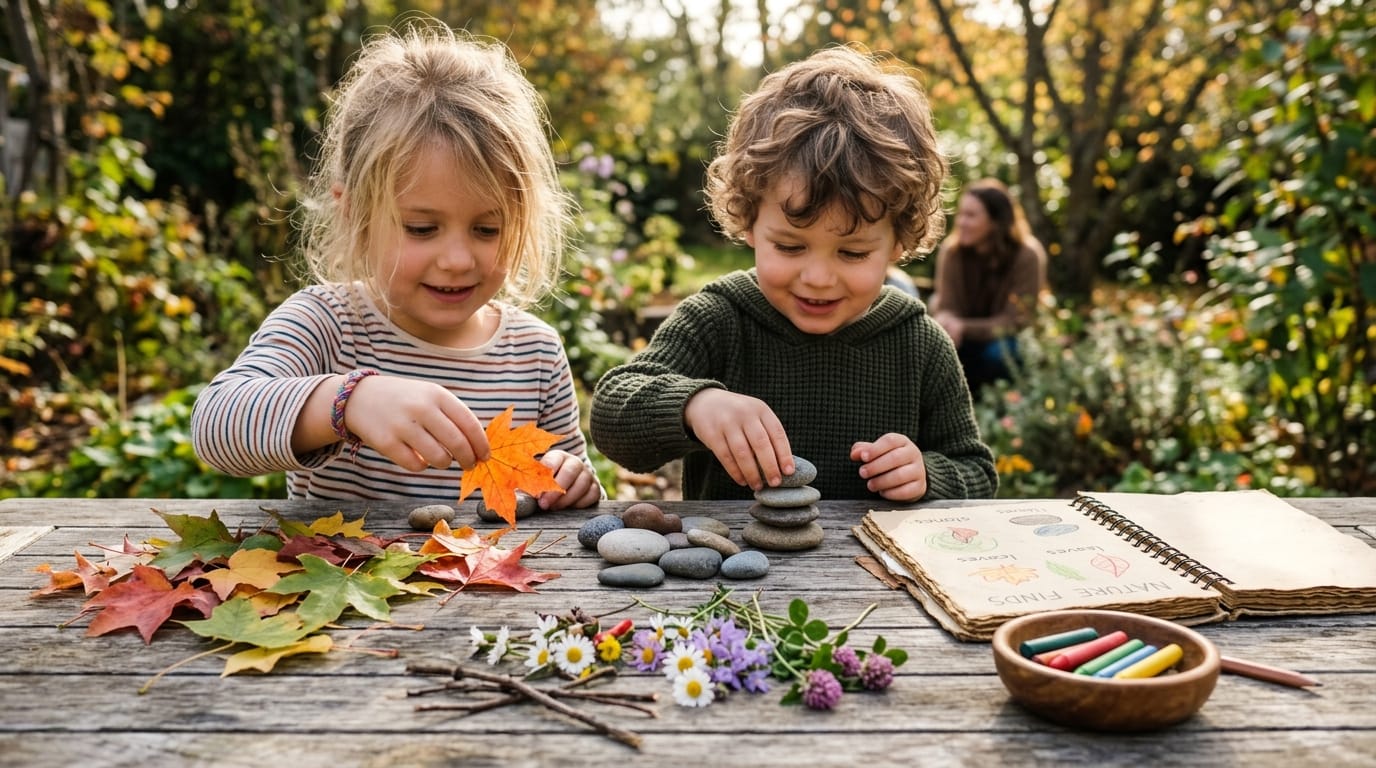
Children spend a lot of time being told what to do: sit down, finish homework, get dressed, clean up, hurry, wait, listen. Outdoor learning gives them a different kind of experience. It invites them to observe, test ideas, move their bodies, and use curiosity. That is why it fits so well with the bigger conversation around unstructured play for kids. Kids need time where they are not only following instructions. They also need space to wonder.
For example, a child can learn early math by counting rocks, comparing stick lengths, sorting leaves by shape, or estimating how many steps it takes to reach the tree. They can learn language by describing clouds, telling a story about an ant, or naming colors around them. They can learn science by watching shadows move, observing insects, collecting fallen leaves, or noticing how plants change after rain.
What outdoor learning can look like on a normal weekday
A normal weekday outdoor learning moment can be very small. After breakfast, you might ask your child to check the weather and describe it in three words. After school, you might take a ten-minute walk and let your child choose one “interesting thing” to talk about. Before dinner, you might let them water a plant, count flowers, or look for shapes in the clouds.
These tiny moments matter because they are realistic. Moms do not need another routine that collapses after two days. Outdoor learning should fit into the life you already have. If your mornings are busy, connect it with your current rhythm by reading our stress-free morning routine for busy moms and adding one simple outdoor observation before school or daycare.
Why nature time supports focus, mood, and creativity
Outdoor time is not just “extra play.” HealthyChildren.org from the American Academy of Pediatrics explains that playing outside can support curiosity, creativity, critical thinking, focus, behavior, and mood. That is why outdoor learning can be helpful for children who feel restless, easily frustrated, or mentally tired after a long school day.
Nature also slows the pace. Screens move fast. School schedules can feel packed. Outdoor learning gives kids a chance to notice details: a bird call, a moving shadow, a puddle, a rough stone, a flower opening, or a bug crossing the sidewalk. These quiet observations help children practice attention in a way that feels natural instead of forced.
How outdoor learning fits with screen-smart family routines
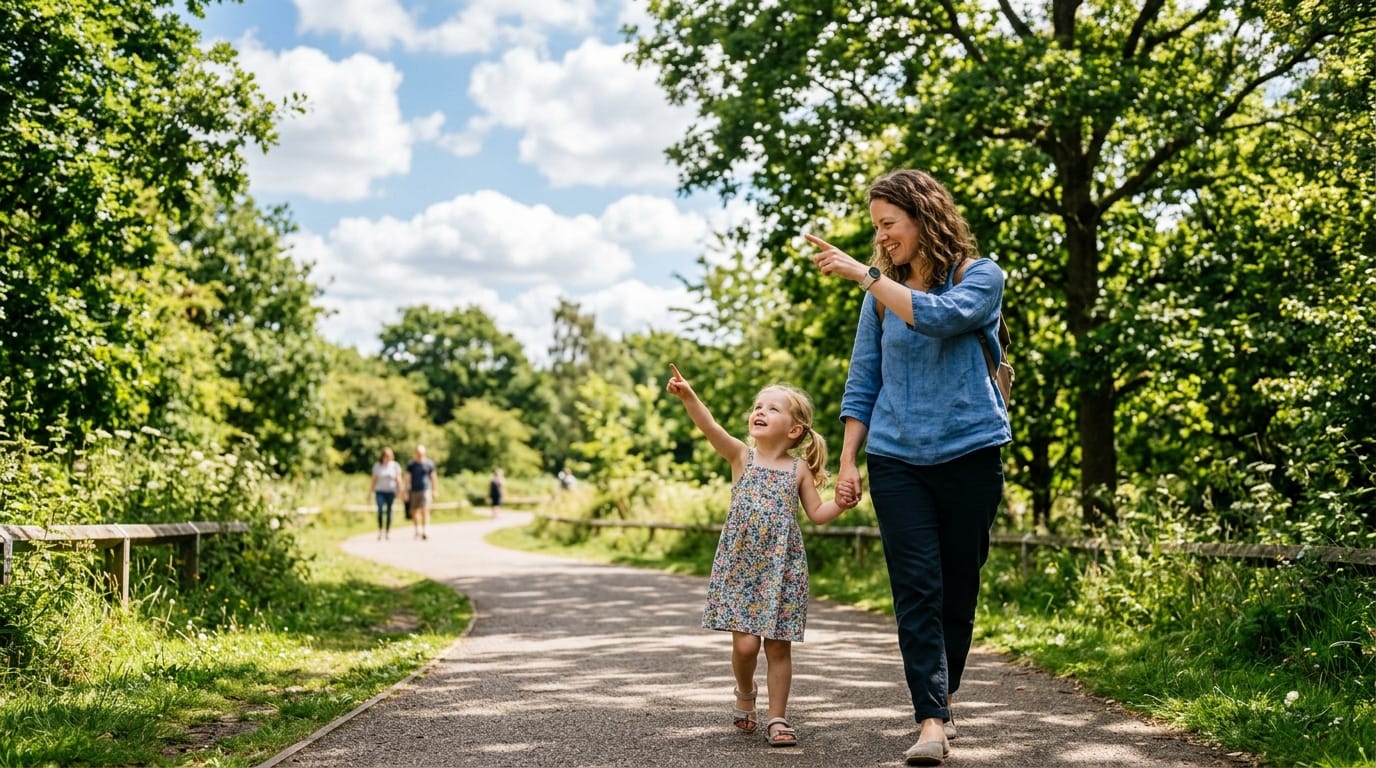
One reason screen-time battles become so exhausting is that kids often do not know what to do when screens are removed. Outdoor learning helps because it gives children a replacement, not just a restriction. Instead of saying, “No tablet,” you can say, “Let’s do our ten-minute outdoor mission first.” That shift matters. Kids respond better when they know what they can do, not only what they cannot do.
Outdoor learning also supports slow parenting for moms because it encourages presence over performance. You are not trying to create a perfect childhood photo or an impressive activity bin. You are helping your child engage with real life. Sometimes that means a beautiful nature walk. Sometimes it means your toddler throws rocks into a puddle for fifteen minutes. Both can count.
Start with tiny outdoor anchors instead of a perfect schedule
The easiest way to make outdoor learning stick is to create tiny anchors. These are small, repeatable moments your family can expect. For example, you can try “morning weather check,” “after-school nature walk,” “before-dinner backyard time,” or “Sunday park learning.” Keep it short at first. Five to fifteen minutes is enough.
You can also create simple prompts your child can answer outside:
- What is one thing you see that changed from yesterday?
- Can you find something soft, rough, round, or green?
- How many birds, cars, trees, or flowers can you count?
- What do you think will happen if we water this plant every day?
- Can you make a story about something you found outside?
These questions build observation, vocabulary, prediction, counting, storytelling, and problem-solving without making the activity feel like homework.
Simple Outdoor Learning Activities Moms Can Actually Use
The best outdoor learning activities are easy to repeat, low-cost, and flexible for different ages. You do not need a printable for every activity. You can use what is already around you: leaves, stones, water, flowers, clouds, shadows, sidewalks, parks, trees, and everyday family errands.
Start with a nature color hunt. Ask your child to find something red, yellow, brown, green, white, or blue. This works for toddlers and preschoolers, but older kids can make it more advanced by naming plant parts, drawing what they see, or writing a short description. Another easy idea is a weather journal. Your child can draw the sky, write the temperature, describe the wind, or compare sunny and rainy days.
For movement-based learning, create a backyard obstacle course using safe objects you already own. Children can jump over lines, crawl under chairs, balance on a path, toss a ball into a basket, or run from one marker to another. This supports coordination while also giving kids a physical outlet. If your child has a lot of energy after school, this can be more helpful than asking them to sit still immediately.
Age-friendly ideas for toddlers, preschoolers, and school-age kids
For toddlers, keep outdoor learning sensory and simple. Let them touch leaves, smell flowers, splash water, stack stones, listen for birds, or name what they see. The goal is not accuracy. The goal is exposure, language, and safe curiosity.
For preschoolers, add sorting, counting, matching, and pretend play. Ask them to sort leaves by size, count steps, match colors, or pretend the garden is a jungle. Preschoolers love repeating activities, so do not worry if they want the same outdoor game again and again.
For school-age kids, make outdoor learning more investigative. Let them measure shadows at different times of day, track plant growth, draw a map of your street, write a nature poem, identify cloud shapes, or compare how different surfaces feel in the sun. You can also connect outdoor time with food by packing simple snacks from your meal plan. For easier ideas, see our post on simple meal prep hacks for moms.
How to keep outdoor learning safe, flexible, and low-pressure
Safety still matters. Check the weather, bring water, use sun protection, choose age-appropriate spaces, and supervise based on your child’s age and environment. If it is too hot, too rainy, or unsafe outside, move the activity near a window, balcony, covered area, or indoor plant. Outdoor learning should not become another source of stress.
Also, keep expectations realistic. Your child may not respond perfectly. They may complain, get distracted, or turn the activity into something silly. That does not mean it failed. Children often learn through repetition and play before they can explain what they learned. The point is to build a rhythm where nature, movement, and curiosity become normal parts of family life.
Outdoor learning for kids in 2026 is not about becoming a perfect activity mom. It is about giving children more chances to explore the real world while giving yourself a simpler way to support learning. Start small. Step outside. Ask one question. Let your child notice one thing. Over time, those little moments can become a calmer, screen-smart, memory-filled part of your family routine.
For more guidance on the benefits of outdoor play, visit HealthyChildren.org’s guide to why playing outside is important for kids.