

A phone-free childhood sounds peaceful in theory, but many moms know the reality is harder. Kids ask for games, videos, group chats, tablets, YouTube, social apps, and “just five more minutes.” Meanwhile, moms are trying to manage school messages, work texts, grocery lists, family calendars, photos, and their own need for a mental break. Technology is woven into family life now, so the goal is not to pretend phones do not exist. The goal is to create healthier boundaries that protect childhood, sleep, creativity, attention, and family connection.
In 2026, more parents are asking whether kids need less screen time and more offline play. That concern is not dramatic. The U.S. Surgeon General has warned that we cannot conclude social media is sufficiently safe for children and adolescents, and recommends family media plans, tech-free zones, and more in-person friendships. For moms, that message can feel both validating and overwhelming. You may know your child needs boundaries, but you also need a plan that does not create daily fights.
This guide explains how to build a realistic phone-free childhood without turning your home into a battlefield. It connects with other Great Articles for Moms resources, including The 2026 Family Media Plan, AI Chatbots and Children in 2026, and How Moms Can Reduce Mental Load.
Why a Phone-Free Childhood Is Trending for Moms in 2026
The phrase phone-free childhood does not always mean children never use technology. For many families, it means delaying personal smartphones, limiting social media, creating device-free routines, and protecting time for sleep, outdoor play, reading, creativity, chores, family meals, and boredom. That last one matters. Boredom is not a parenting failure. It is often the space where imagination starts working again.
Moms are also noticing that screens can quietly take over the day. A child may start with one short video and end up irritable after an hour. A quick game can become a meltdown when it is time to stop. Older kids may feel pressure to reply instantly, compare themselves online, or stay connected even when they are tired. A phone-free approach gives families permission to slow that cycle down.
What phone-free really means at home
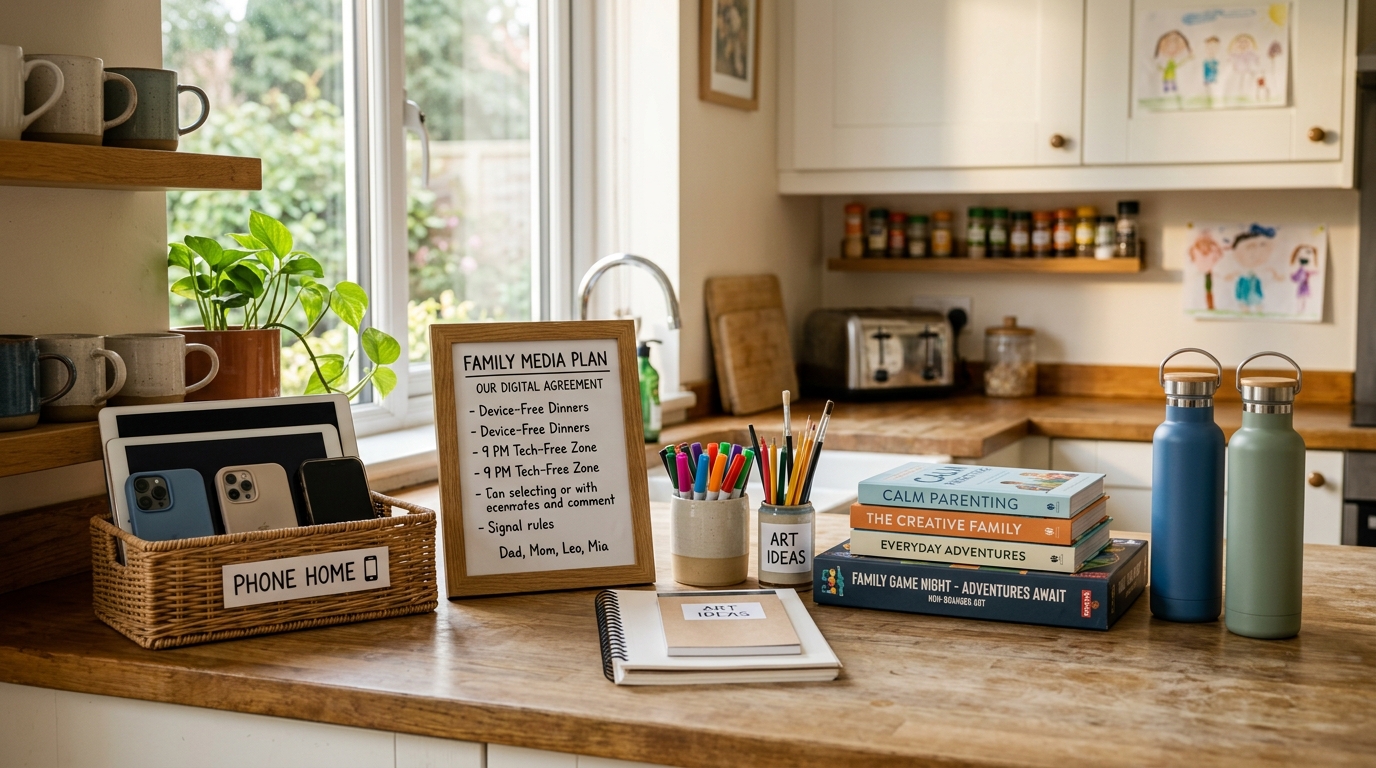
A phone-free home does not have to be anti-technology. It can be pro-childhood. Kids can still learn computer skills, watch family movies, video call relatives, use school devices, and enjoy occasional games. The difference is that technology does not get unlimited access to every room, every routine, and every emotional moment.
For younger kids, this may mean no personal phone and no unsupervised apps. For tweens, it may mean a basic phone, shared family device, or strict app limits. For teens, it may mean charging phones outside bedrooms, pausing notifications during homework, and having honest conversations about group chats, privacy, and social pressure. The right plan depends on age, maturity, school needs, and your family values.
Start with zones instead of endless rules
Rules can feel exhausting when there are too many. Zones are easier. Choose a few places or moments where phones do not belong: bedrooms at night, the dinner table, the car ride to school, family walks, homework time, and the first hour after waking. These boundaries are easier for kids to understand because they are tied to routines, not random punishments.
If your mornings are already chaotic, start small. A no-phone breakfast or no-screen school prep rule can help kids begin the day more calmly. For more support, link this habit with How to Create a Stress-Free Morning Routine for Busy Moms.
Make boredom easier, not impossible
Kids often reach for screens because screens are easy. Offline play needs to be easy too. Keep a simple basket with paper, crayons, stickers, blocks, puzzles, books, cards, clay, toy animals, or building toys. You do not need a perfect playroom. You need visible options that do not require mom to become a full-time entertainment director.
Offline play that works for busy households
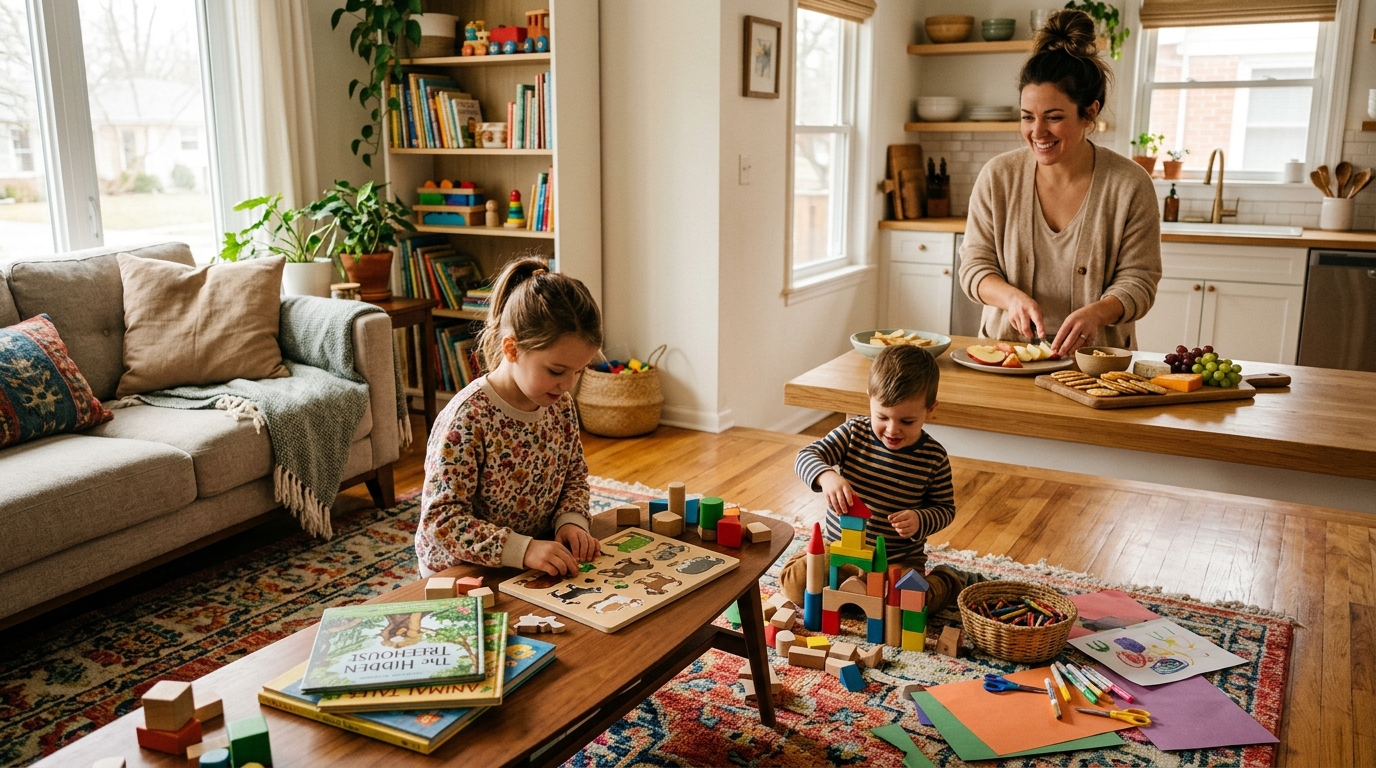
Offline play works best when it matches your real life. A tired mom does not need a complicated craft involving ten supplies and a huge cleanup. A better plan is to create low-effort choices kids can start by themselves. Think drawing, magnetic tiles, pretend restaurant, indoor picnic, audiobook and coloring, blanket forts, sidewalk chalk, scavenger hunts, puzzles, or helping with simple cooking tasks.
Outdoor time can also reset screen cravings. Even a short walk, backyard play, bubbles, scooters, jump rope, or playground stop can help kids release energy. If weather is rough, create an indoor movement option: dance songs, hallway obstacle course, stretching cards, or “animal walks.” The goal is not to fill every minute. It is to give children enough offline structure that screens are not the only easy answer.
Use a social agreement with other parents
One reason phone boundaries feel hard is that kids compare. “Everyone else has one” is powerful. Moms can make this easier by talking with other parents. You do not need everyone to agree, but even one or two families with similar limits can reduce pressure. Shared norms help kids understand that your rule is not random or unfair.
This is especially helpful for group chats, sleepovers, gaming, and social media. Before a playdate, ask simple questions: Will devices be used? Are kids allowed online? Will there be YouTube or games? Clear expectations prevent awkward surprises and reduce conflict later.
How to Build Phone-Free Habits Without Constant Battles
The biggest mistake is trying to change everything overnight. If your child is used to lots of screen time, a sudden total ban may create huge resistance. A calmer approach is to build replacement habits first. Add more offline options, create predictable tech times, and explain the reason behind changes. Children are more likely to cooperate when the rule feels steady, not emotional.
A written family media plan can help because it moves the decision out of the daily argument. Instead of debating every day, you can point to the plan. This is exactly why The 2026 Family Media Plan is a helpful internal resource. It gives moms a structure that reduces repeated negotiations.
Reduce the battles by changing the environment
Kids struggle more when the device is visible, charged, and within reach. Make the environment do some of the work. Create a charging station outside bedrooms. Use a phone basket during meals. Keep tablets out of sight during homework. Turn off autoplay. Remove apps that cause the most conflict. Use parental controls when needed, but do not rely on them alone.
Also look at your own phone patterns with honesty, not guilt. Kids notice when moms are always checking notifications. You do not need to be perfect. But small modeling moments help: “I’m putting my phone away while we eat,” or “I’m charging my phone in the kitchen tonight so I can sleep better.” This turns the boundary into a family habit, not a child-only punishment.
Protect sleep and family connection first
If you only change one thing, protect sleep. Phones in bedrooms can interfere with rest, especially for older kids and teens who feel pulled into messages, videos, or scrolling. Charging devices outside bedrooms is one of the clearest phone-free habits a family can create. It also reduces late-night secrecy and makes mornings easier.
Protecting family connection matters too. A child does not need constant lectures about screen dangers. They need repeated experiences that feel better than scrolling: laughing at dinner, playing outside, reading together, cooking, helping, building, exploring, and being noticed. If you feel too burned out to lead that energy every day, you are not failing. Read Mom Burnout in 2026 for a gentler approach to recovery.
For an external authority source, moms can review the U.S. Surgeon General’s page on Social Media and Youth Mental Health. It explains why families are encouraged to create media plans, tech-free zones, and healthier online habits.
In conclusion, a phone-free childhood is not about rejecting the modern world. It is about giving kids enough space to grow without constant digital noise. Start with a few tech-free zones, make offline play easier, protect sleep, talk with other parents, and use a family media plan to reduce daily arguments. The goal is not perfect screen control. The goal is a calmer home where kids still know how to play, rest, imagine, connect, and be fully present in real life.
Disclaimer: This article is for general educational purposes only and is not medical, mental health, or legal advice. If your child is struggling with anxiety, depression, bullying, online harm, sleep problems, or major behavior changes, contact a qualified healthcare or mental health professional.