

If screen time in your house feels like a daily negotiation—arguments, eye rolls, “just five more minutes,” and guilt—you’re not alone. In 2026, more moms are searching for a better way to manage devices because screens aren’t going away. What’s changing is the parenting approach: instead of trying to be “strict” or “screen-free,” families are moving toward being screen-smart.
That shift is showing up in trends and expert guidance. Pinterest’s Parenting Trend Report 2026 highlights how parents are turning to routine charts and more screen-free activities to create calmer days and more connection. At the same time, pediatric guidance increasingly points parents toward building a personalized Family Media Plan rather than relying on vague rules or constant conflict.
This article gives you a realistic, mom-friendly system: a family media plan for moms that actually fits busy life—school mornings, work, chores, and the exhaustion that makes it tempting to hand over the tablet just to breathe.
Why “screen-smart parenting” is trending in 2026
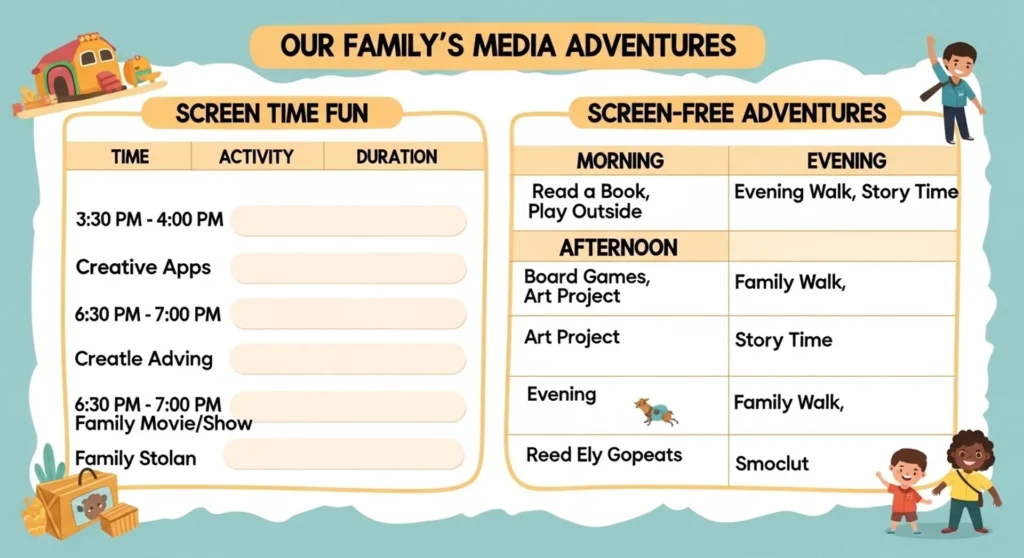
Parents aren’t suddenly anti-technology. They’re tired of the side effects: bedtime fights, less outdoor play, attention issues, and family time getting swallowed by scrolling. Pinterest’s report points to rising interest in structured routines and screen-free activity ideas—signals that families want more intentional childhood experiences. It’s not about perfection; it’s about regaining control of the day.
At the same time, the American Academy of Pediatrics (AAP) continues to recommend building a customized Family Media Plan so each household sets boundaries that match their routines and values—rather than copying random rules from social media. The AAP even provides a free tool to create your plan.
Authority resource: AAP Family Media Plan tool (HealthyChildren.org)
What a family media plan actually is (and what it’s not)
A family media plan is a simple agreement your household follows about:
- When screens are allowed
- Where screens are allowed
- What content is okay
- How you handle conflict, consequences, and exceptions
It’s NOT a punishment system. It’s not “screens are evil.” It’s also not a rigid schedule that collapses the moment your kid gets sick or life happens. A good plan is flexible, clear, and easy to enforce even when you’re tired.
The 5-part family media plan for moms (copy this)
1) Set your “screen anchors” (non-negotiables)
Start with 3–5 rules that stay steady. Keep them simple and based on what you care about most.
Examples of strong anchors:
- No screens during meals
- No screens 60 minutes before bedtime
- Screens stay out of bedrooms at night
- Homework and chores first (then screens)
- One screen-free family block on weekends
These anchors work because they protect the “high-impact” parts of your day: connection, sleep, and responsibilities.
Internal link idea: if you want a calmer start to your day, pair this plan with your morning routine guide:
How to Create a Stress-Free Morning Routine for Busy Moms.
2) Create a simple daily structure (routine charts win)
Routine charts are trending for a reason: they reduce decision fatigue. When kids know what happens next, they argue less. Pinterest’s 2026 report highlights parents searching for routine charts and structured support at home—because structure lowers household stress.
Try a “3-block day” instead of hourly micromanaging:
- Morning block: no screens until dressed, fed, and ready (or after school drop-off)
- After-school block: snack + decompression + homework/chores + then screen time window
- Evening block: family time + dinner + wind-down, with screens off before bed
The magic is that the screen window is predictable. Predictable beats negotiable.
3) Decide what “good screen time” means in your house
Not all screen time is equal. A family media plan for moms works best when you separate:
- Active screen time: learning apps, creative tools, building games, family movie night
- Passive screen time: endless scrolling, short-form video loops, mindless bingeing
Active use tends to cause fewer meltdowns when it ends. Passive use is usually the one that triggers battles—because it’s designed to keep kids watching “just one more.”
Practical rule: Allow active screen time more easily than passive screen time. And if you can, keep passive use to shorter windows.
4) Add “replacement activities” so you’re not just saying no
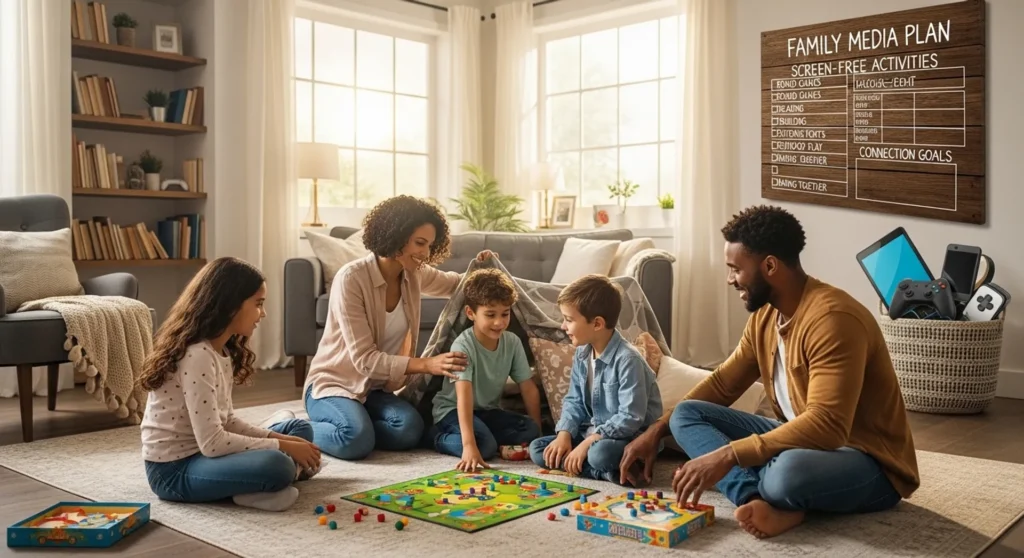
This is where most screen-time rules fail: parents remove screens without replacing them with anything realistic. Kids aren’t resisting because they’re “bad.” They’re resisting because screens are easy entertainment and you just removed the easiest option.
Create a short list of alternatives your kids can pick from. Keep it visible—on the fridge, a whiteboard, or printed cards.
Screen-free replacement ideas that actually work:
- 10-minute “outside break” challenge
- Board game or card game drawer
- Sticker book / coloring station
- Audio stories or music while building LEGO
- “Pick a snack and help me cook” mini-task
Your site already supports this theme well. This post even calls out the power of a screen-free day:
Affordable and Fun Weekend Activities for the Whole Family.
5) Build kid buy-in (so you stop being the screen police)
If you’re doing 100% enforcement alone, the plan won’t hold. The fastest way to reduce battles is to involve kids in setting the rules—without letting them run the show.
Use this script:
- “Screens are part of our life, but they can’t run our life.”
- “We’re making rules so we sleep better, argue less, and have more fun.”
- “You can help pick the screen-time window, but the anchors stay.”
Then let them choose between two acceptable options (for example: screen time after homework OR after dinner). Choice reduces power struggles.
What to do when the plan breaks (because it will)
Real life doesn’t follow a perfect system. Here’s how to handle common breakdowns:
If your child melts down when screen time ends
- Give a 10-minute warning + 2-minute warning
- Use a timer they can see
- End on a natural stopping point (“finish the level, then off”)
If you keep giving screens because you’re exhausted
This isn’t a discipline problem—it’s a support problem. You need a “low-energy plan,” not more guilt. Try:
- Audio story time while you sit down
- One bin of activities that only comes out during your hardest hour
- Rotating “quiet-time” stations
If mom burnout is part of the cycle, this internal read fits perfectly:
How Moms Can Reduce Mental Load and Feel Less Overwhelmed Every Day.
How to set screen boundaries without mom guilt
A lot of moms don’t struggle with rules—they struggle with guilt. You worry your kid will be “behind” if they aren’t online enough, but also worry they’ll be harmed if they’re online too much. The solution is not extreme. The solution is clarity.
When you have a plan, you’re not reacting emotionally in the moment. You’re following a family agreement you created on purpose.
Related internal support:
How to Stop Mom Guilt: Practical Steps to Feel Confident in Motherhood.
Quick-start family media plan (copy/paste version)
Our Family Media Anchors:
- No screens during meals
- No screens 60 minutes before bedtime
- Homework/chores before screens
- Screens stay out of bedrooms at night
Our Screen Window: ____________________
Our Approved Content: ____________________
Our Screen-Free Options List: ____________________
Our Consequence (simple and consistent): ____________________
Final thoughts
A family media plan for moms is not about being stricter. It’s about being clearer. The trend in 2026 is moms building structure—routine charts, predictable days, and screen-free alternatives—because it makes family life calmer and more connected. When you set anchors, create a daily rhythm, and give kids replacement activities, you stop fighting the same battle every day.
You don’t need perfection. You need a plan you can actually follow on your most tired Tuesday.