
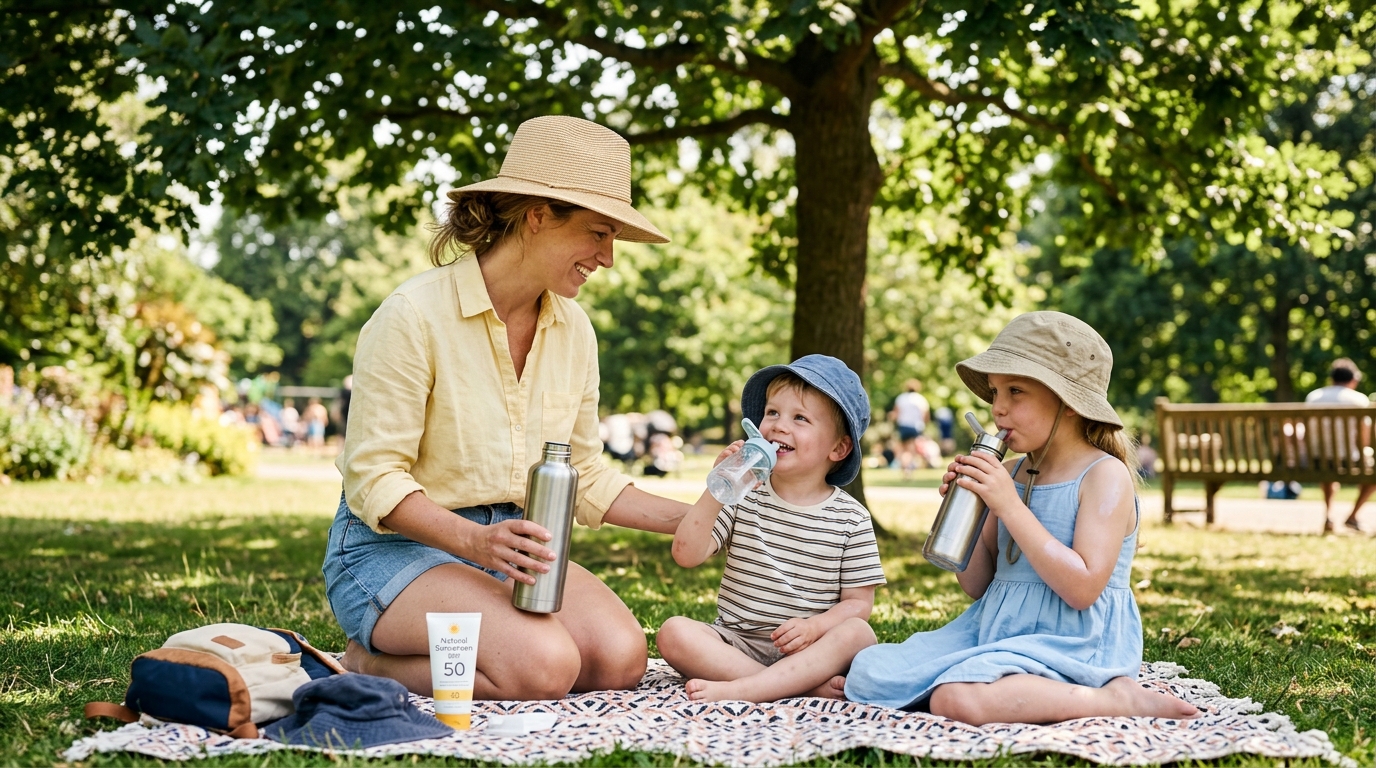
Summer heat safety for kids is becoming one of the most important family wellness topics for moms in 2026. Hotter days, longer warm seasons, busy summer schedules, outdoor sports, beach trips, camps, playground visits, and family travel can all make heat harder to manage. Kids still need movement, play, fresh air, and fun, but they also need adults who understand when the heat is becoming too much.
For moms, this can feel like one more thing to track. You are already managing snacks, sunscreen, screen time, school break routines, sibling moods, laundry, appointments, and the endless “what are we doing today?” questions. But heat safety does not have to become another overwhelming checklist. A few simple habits can make summer safer and calmer for the whole family.
This guide explains how to handle summer heat safety for kids without panic. You will learn how to plan outdoor time, keep kids hydrated, spot warning signs, create indoor backup activities, and know when to call for help. It also connects naturally with existing Great Articles for Moms resources like The 2026 Well-Child Visit Checklist for Busy Moms, How Moms Can Reduce Mental Load, and The 2026 Family Media Plan.
Why Summer Heat Safety for Kids Matters More in 2026
Children are not just smaller adults. They can get overheated faster, and younger kids depend on adults to notice when they need water, shade, rest, or a change of plan. The Centers for Disease Control and Prevention explains that infants and young children rely on others to keep them cool and hydrated when it is hot outside. That means heat safety is not only about reminders. It is about building a routine that protects kids before they feel sick.
Summer also brings a tricky parenting balance. Kids want to run, swim, bike, climb, and play. Moms want them active and off screens, especially when school is out. But when temperatures rise, outdoor play needs boundaries. A good plan does not cancel summer fun. It simply moves the hardest activities to safer times, adds more breaks, and makes hydration visible.
Why kids can overheat faster than moms expect
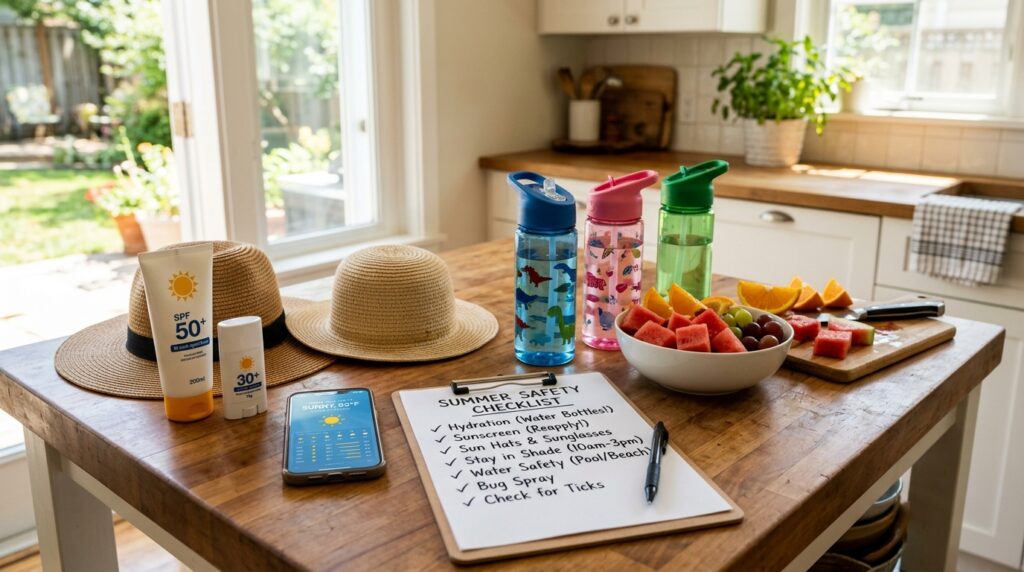
Kids may not recognize early heat symptoms. A child might keep running even when tired, ignore thirst, or say “I’m fine” because they do not want to stop playing. Some kids also struggle to describe dizziness, headache, nausea, cramps, or weakness. Instead, they may become cranky, clingy, unusually quiet, or suddenly emotional. That is why moms need to watch behavior, not just wait for a child to complain.
Heat can also affect mood. A child who seems difficult may actually be hot, thirsty, tired, or overstimulated. Before assuming it is bad behavior, try cooling the body first: water, shade, rest, a snack, lighter activity, or indoor time. This fits beautifully with a positive parenting mindset because it asks, “What is my child’s body needing right now?” instead of jumping straight to frustration.
Hydration needs to start before kids say they are thirsty
Hydration works best when it starts early. Do not wait until your child is red-faced and exhausted to offer water. Build water into transitions: after breakfast, before leaving the house, when arriving at the park, before swimming, after active play, and before heading home. Younger kids often drink more when water bottles are fun, easy to open, and visible.
For picky drinkers, add simple choices. Let them pick a bottle color, add fruit slices, use silly straws at home, or create a “water first” rule before juice or sweet drinks. If you need snack ideas that pair well with hydration, link this topic to Top 10 Healthy Snacks Kids Actually Love. Watermelon, oranges, cucumber, yogurt, smoothies, and cold fruit can help make hot days easier.
Outdoor play needs cooler windows and real breaks
Outdoor time is usually safer earlier in the morning or later in the day. Midday heat can be tougher, especially on playgrounds, turf, pavement, and parking lots. Surfaces can become much hotter than the air. Before kids sit, crawl, or play, touch slides, swings, benches, buckles, and bike seats. If it is too hot for your hand, it is too hot for their skin.
Simple routines that make hot days easier
The best summer routines are simple enough to repeat when everyone is tired. Create a heat-day rhythm: check the weather, fill water bottles, pack hats, plan the outdoor window, and choose an indoor backup. This removes decision fatigue because you are not inventing a new plan every single day.
If mornings are already chaotic, connect your heat routine to the family’s existing rhythm. For example, after breakfast, everyone fills a bottle. Before shoes go on, sunscreen and hats happen. Before leaving the house, mom checks the heat index or weather app. This pairs well with How to Create a Stress-Free Morning Routine for Busy Moms because summer safety works better when it attaches to habits you already have.
Create a “hot day bag” by the door
A hot day bag can reduce mental load fast. Keep sunscreen, hats, water bottles, cooling towels, wipes, snacks, a small first-aid kit, and a spare lightweight shirt in one place. You do not need a perfect Pinterest system. You need a grab-and-go setup that prevents the daily scramble. If you are already feeling stretched, read How Moms Can Reduce Mental Load and Feel Less Overwhelmed Every Day for more ideas on reducing invisible planning.
Warning Signs, Indoor Backup Plans, and When to Get Help
A big part of summer heat safety for kids is knowing when to stop. Moms often push through because plans are already made, tickets were bought, friends are waiting, or kids are begging for five more minutes. But heat is not the place to prove toughness. If a child looks unwell, slow down immediately.
Watch for heavy sweating, unusual tiredness, dizziness, headache, nausea, vomiting, muscle cramps, fast heartbeat, fast breathing, confusion, fainting, or skin that seems very hot. If your child has asthma, a heart condition, takes certain medications, or has other health concerns, ask your pediatrician whether your family needs a specific heat plan. This is a good topic to bring up during a routine checkup, especially if summer camps, sports, or travel are coming.
What moms can do when the heat changes the plan
If your child seems overheated, move to shade or air conditioning, offer fluids if they can drink safely, loosen tight clothing, use cool cloths, and let them rest. Do not send them right back into active play the moment they seem better. Recovery needs time. If symptoms are severe, confusing, or not improving, seek medical help.
Indoor backup plans make this easier because the day does not feel “ruined” when outdoor plans change. Keep a short list of low-effort activities: library visit, indoor obstacle course, puzzles, craft bin, board games, movie rest time, baking, audiobooks, or quiet play. This also supports screen-smart parenting. Instead of using screens as the only emergency backup, create a few non-screen choices your child already knows.
Screen-free does not have to mean high-energy

On extreme heat days, screen-free activities should not exhaust everyone. Think calm, cool, and doable. Reading under a fan, building with blocks, making paper crafts, sorting toys, listening to stories, or playing simple card games can help kids stay engaged without overheating. The point is not to create a magical summer every day. The point is to keep kids safe and give moms a realistic backup plan.
For official guidance, you can link readers to the CDC’s resource on infants, children, and heat. It is a strong authority source because it reminds parents that young children need adult help staying cool and hydrated, and that parked cars are especially dangerous even when windows are cracked.
In the end, summer heat safety for kids is not about becoming a perfect summer manager. It is about noticing the weather, adjusting the plan, and respecting your child’s limits. Keep water visible. Choose cooler outdoor windows. Build breaks into the day. Watch behavior changes. Have an indoor backup ready. And when something feels off, trust your instincts and get help.
Summer can still be fun, active, and memorable. It just needs a little more planning when the heat rises. With a few simple routines, moms can protect their kids, lower their own stress, and enjoy the season without feeling like every hot day is a crisis.
Disclaimer: This article is for general educational purposes only and is not a substitute for medical advice. If your child has symptoms of heat illness, a medical condition, unusual behavior, fainting, confusion, breathing trouble, or symptoms that do not improve quickly, contact a healthcare professional or emergency services.